The best size chart you own is already in your drawer. Find the tee that fits exactly how you like, lay it flat on the bed, smooth it out and grab a tape measure. Five minutes with that shirt will tell you more than any letter on a label, because a medium at one brand can be a small or a large somewhere else.
How unisex cuts usually run
Most unisex tees are cut from what used to be called a men's pattern. The body is straight with no shaping at the waist. Compared with a women's cut in the same letter size, the shoulders are wider, the sleeves a touch longer and the body longer overall.
So a unisex medium tends to feel roomy if you normally buy women's sizes. A common rule of thumb is to go one size down from your usual women's size, but treat that as a starting point only. Plenty of people like the extra room, and some of the best ways to wear a unisex tee depend on it, like tucking it into high-waisted jeans or knotting it at the hip. If you normally buy men's sizes, a unisex tee will usually fit the way you'd expect.
Graphic tees go unisex a lot for a simple reason. One cut means one set of print positions, so the artwork lands in the same place for everyone. It also means a single tee can sit in both Guys and Girls, which is exactly where you'll find the claret tee with the French slogan.
Measuring a tee you already love
Lay the shirt face up with no wrinkles, and don't stretch it while you measure. Take these in centimetres:
- Across the chest, armpit seam to armpit seam, about 2.5cm below the armholes.
- Down the body, from the highest point of the shoulder next to the collar, straight to the hem.
- Across the back, from one shoulder seam to the other.
- Along the sleeve, from the shoulder seam to the cuff.
Save the numbers in your phone. When you look at a size chart, check what it's measuring. A garment chart gives the shirt's own dimensions, so you can compare them directly with yours. A body chart gives the chest of the person who should wear it, and the tee will be bigger than those figures on purpose.
Also check whether the chest figure is the flat width or the full way round. A flat measurement is half the circumference, and mixing the two up is an easy way to end up with a tee that's two sizes out.
Chest width matters most
If you only check one number, make it this one. Length can be tucked or cropped and sleeves can be rolled, but a tee that's too tight across the chest pulls at the armholes and stretches any print on the front out of shape. One that's far too wide hangs off you like a tent.
For a regular fit, the flat chest width of a tee usually comes out at around half your body chest measurement plus a few centimetres of ease. Want it oversized? Add more. Like it close? Take a little away, though jersey only has so much give before it starts to cling.
Length and shoulder seams
Length is personal. A hem that sits a few centimetres below the waistband is the classic look. Taller people often find a standard unisex tee fits the chest perfectly and stops short at the belt, so they size up for length and live with a bit of extra width.
The shoulder seam is the quiet giveaway. On a regular cut it should sit right on the edge of your shoulder bone. If it droops a few centimetres down your arm, the tee is too big even if the chest feels fine. If it creeps up towards your neck, it's too small. The exception is a dropped shoulder style, where the seam is meant to hang lower as part of a relaxed shape, so check the product photos before you judge.
When to size down, and when not to
Size down if you want a neat fit, if you usually wear women's sizes and don't want much room, or if you're between sizes and the smaller chest still matches your favourite tee. Don't size down if the shirt is likely to shrink, or if you're after that slouchy, borrowed-from-a-mate look.
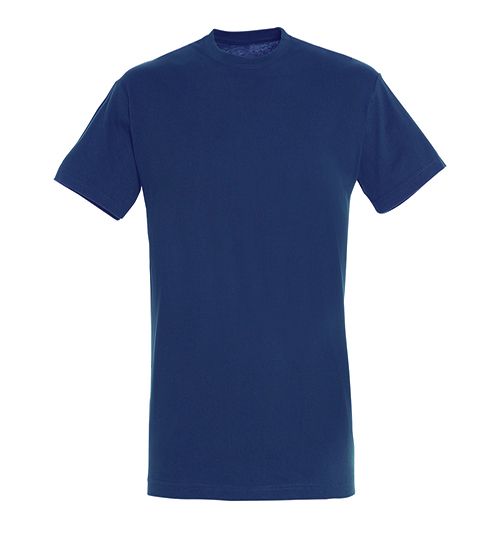
Shrinkage depends on the fabric and whether it's been treated first. The Unisex CU Navy T-Shirt, for example, is listed as a regular fit in a 190 GSM blended cotton that's been bio-washed, with no shrinking. GSM means grams per square metre, the weight of the fabric, and a 190 GSM tee is a solid midweight that hangs straight instead of clinging. A thin, all-cotton tee that hasn't been pre-shrunk is a different story, and a hot wash can take a little off the length.
Bought one a size too big? It isn't always a lost cause, and our older post on shrinking a shirt safely has a few ways to bring it in. Once the size is right, keeping it right is mostly about storage, so have a read of whether tees are better folded or hung before the shoulders get pulled out of shape.
From the shop
Tees, hoodies, dresses and beanies, most with the Milkshake logo on them.
Browse the range