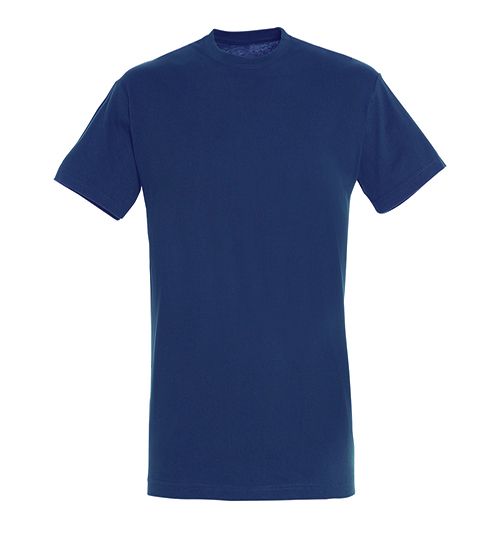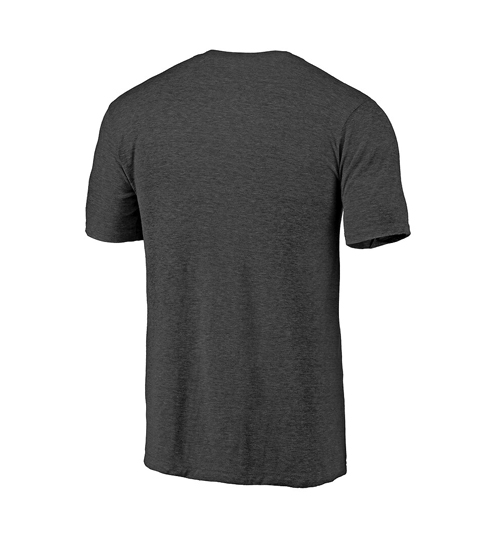
Two little peaks sticking up from the shoulders. Anyone who has pulled a tee off a wire hanger after a week in the wardrobe knows them. They're the clearest sign that jersey doesn't enjoy being hung up, and they're why our answer is fold most of the time, with a few sensible exceptions.
What hanging does to a t-shirt
Most t-shirts are knitted, not woven. A knit is a run of interlocking loops, which is what gives a tee its stretch and comfort, and it also means the fabric gives under weight. Hang one up and the whole shirt is held by two small points where the ends of the hanger meet the shoulders. Gravity does the rest.
Over a few weeks that pull stretches the shoulders and can lengthen the body slightly. A heavier tee drags on itself harder, and a tee hung while it's still damp is worse again, because wet cotton stretches easily and then dries in its new shape. The bumps themselves come from the hanger tips pressing into the same spot until the knit sets around them.
The collar suffers too. Pushing a hanger in through the neck opening stretches the neckline every single time, and a wavy, baggy collar is very hard to bring back. If you do hang a tee, slide the hanger in from the hem.
How to fold for a drawer
This basic fold keeps every tee flat and the same size, which matters once you start storing them side by side:
- Lay the tee face down and smooth it out.
- Fold one side in towards the middle, roughly a third of the width, then fold the sleeve back along that edge.
- Repeat on the other side so you're left with a long rectangle.
- Fold the bottom up to the collar, in half or in thirds depending on how deep your drawer is.
Now try standing them upright instead of stacking them. Put each folded tee on its edge, like files in a box, and you can see every one at a glance. You stop wearing only the top two in the pile, and pulling one out doesn't wreck the rest.
Leave a bit of breathing room. A big plastisol print can crack along a sharp crease if a packed drawer presses it flat in the same place for months. With embroidered tees, set your folds either side of the design rather than straight through it. A crease pressed into dense stitching is stubborn, though our guide to washing and ironing embroidery shows how to ease one out from the back.
Rolling for travel
For a bag, rolling beats folding. Rolled tees squeeze into odd corners, and because there are no hard fold lines, they come out with soft creases that drop out after an hour of wear.
The neatest version is the tight roll that backpackers swear by. Lay the tee flat and turn the bottom 10cm or so inside out to make a cuff. Fold the sides in, then roll tightly from the collar down towards the hem. When you reach the cuff, flip it over the roll so it holds itself together. Each tee becomes a little sausage that won't unravel when you rummage.
Rolls suit a rucksack especially well, since they sit side by side and you can pull one out without unpacking everything above it. A weekend bag like the Safari Club Weekender Rucksack takes them easily. If you're heading off for a few days in a field, our British weather festival list helps you decide which tees make the cut.
Which tees are better on a hanger
Linen and linen blends crease badly in a drawer and those creases are hard to shift, so hang them. The Unisex CU Cream T-Shirt is described as linen, and that's the kind of tee that's happier on a hanger. Polos are another, as the collar holds its shape better hanging than squashed under a pile. And a tee you've already picked out for a gig at the weekend can live on a hanger for a few days without coming to any harm.
What hangers to use
If you're going to hang tees, the hanger matters more than you'd think.
- Wide, rounded shoulders spread the weight over a bigger area and stop the peaks forming.
- Velvet or flocked hangers grip the fabric, so the shirt doesn't slide off and end up in a heap on the wardrobe floor.
- Shaped wooden hangers are best kept for jackets and heavier tops that need their shoulders filled out.
- Thin wire hangers from the dry cleaner are the worst option for jersey. Recycle them.
There's also a middle way that works well. Fold the tee in half lengthways and drape it over the bar of the hanger, the way you'd hang trousers. There's no pressure on the shoulders at all, so no bumps, and it still hangs where you can see it.
Storage starts with the right fit
A tee that fits well puts less strain on its own seams, on the hanger or off it. A shirt that pinches at the chest gets pulled out of shape with every wear, and no amount of careful folding fixes that. If you're buying new, our guide to unisex sizing walks through measuring a tee you already own and comparing it to a size chart. And when the drawer needs topping up, have a look at what's new.
From the shop
Tees, hoodies, dresses and beanies, most with the Milkshake logo on them.
Browse the range